
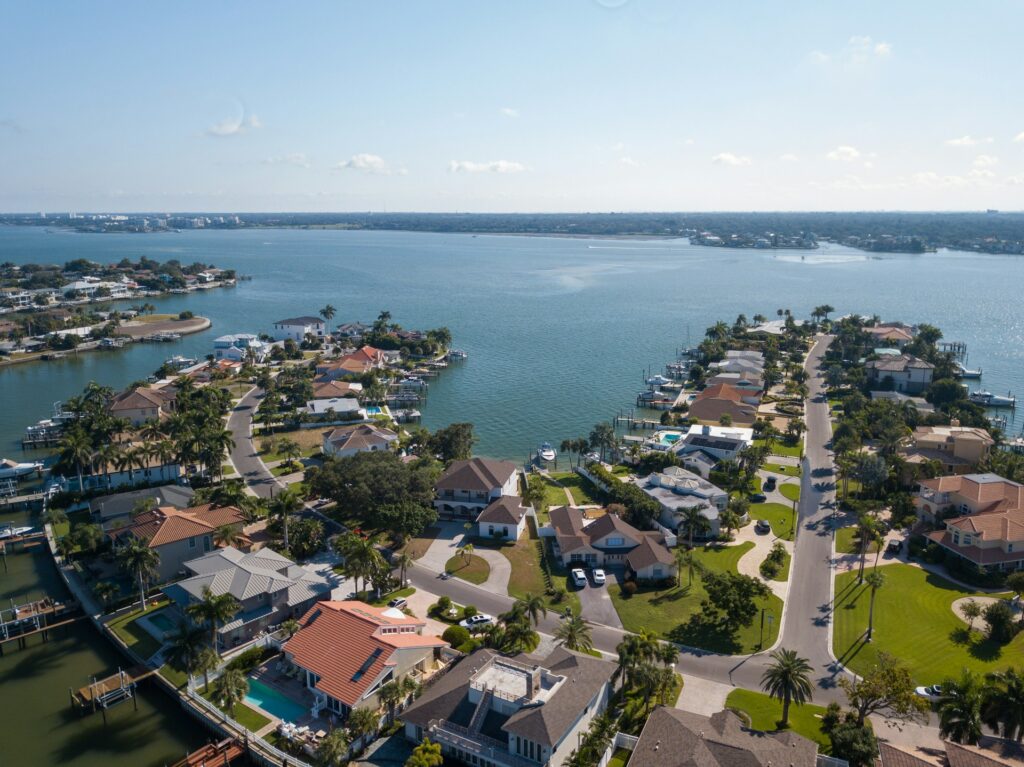
Florida is one of the most demanding roofing environments in the country. Intense UV exposure every month of the year, daily rain events through a six-month rainy season, high humidity that never really lets up, and a hurricane season that runs June through November — these aren’t occasional challenges. They’re the operating conditions your roof has to perform in every single day.
The result is that roofing materials that work fine in most of the country underperform here. Choosing the right material for a Florida home or commercial building isn’t just about aesthetics or upfront cost. It’s about what holds up over 20, 30, or 50 years of Florida weather without failing under pressure when it matters most.
This guide covers the top roofing materials for Florida properties, what each one does well, where each one has limitations, and how to match the right material to your specific building and situation.
What Makes Florida Different for Roofing
Before getting into the materials themselves, it helps to understand exactly what Florida’s climate demands from a roofing system.
UV exposure. Florida receives more solar radiation annually than almost any other state. UV degrades roofing materials over time, breaking down surface coatings, drying out sealants, and accelerating the aging of membranes and shingles. Materials that aren’t engineered for sustained UV exposure reach the end of their reliable service life faster here than in most of the country.
Hurricane season wind loads. Florida’s High-Velocity Hurricane Zones (HVHZ), which include Miami-Dade and Broward counties, require roofing systems to meet the Florida Building Code’s most demanding wind uplift standards. Locations like Miami-Dade and Broward counties face winds between 140 and 185 mph during peak hurricane seasons. Outside the HVHZ, wind loads are still significant across the state during any named storm.
Rainfall intensity. Florida’s summer storm pattern delivers heavy rainfall fast. A roofing system needs to shed water quickly and maintain watertight integrity at every seam, penetration, and transition point — every single storm.
Humidity and moisture. Year-round humidity accelerates mold growth, degrades certain materials, and keeps moisture active in roofing assemblies far longer than in drier climates. Ventilation, moisture-resistant materials, and quality installation all matter more here as a result.
Salt air. For properties within several miles of the coast, salt air is a real factor. It accelerates corrosion in metal fasteners and components that aren’t specifically rated for coastal environments.
Any roofing material worth considering for a Florida property needs to address these factors, not just one or two of them.
Metal Roofing
Metal roofing is the top performer in Florida’s climate across nearly every metric that matters. Metal panels interlock tightly, creating a nearly impenetrable shield, and many are rated to withstand winds of 140 to 160 mph. Standing seam metal systems with concealed fasteners can perform even beyond that range when properly installed.
How it performs in Florida’s climate:
Heat reflectivity is one of metal roofing’s most valuable qualities in a state where cooling costs run high nearly year-round. Light-colored and reflective metal roofs deflect solar radiation rather than absorbing it, which reduces rooftop temperatures and lowers the demand on HVAC systems. Many Florida property owners see meaningful reductions in energy costs after switching to metal.
Wind performance is where metal roofing truly separates itself. Standing seam installation creates the strongest hurricane-resistant system available, with concealed clips that allow metal panels to expand and contract naturally while maintaining secure attachment to the roof deck.
For coastal properties, material selection within the metal category matters. Aluminum roofing stands out as the premium choice for coastal areas within 10 miles of saltwater, with natural corrosion resistance that maintains its protective qualities for 50 to 70 years without significant degradation. For inland properties, Galvalume steel provides excellent value at a lower cost.
Lifespan: 40 to 70 years with proper maintenance.
Best for: Homeowners and commercial property owners prioritizing long-term value, maximum storm protection, and energy efficiency. Properties in coastal zones should specify aluminum or Galvalume over standard galvanized steel.
Limitations: Higher upfront cost than asphalt shingles. Can be noisy during heavy rain without proper insulation. HOA restrictions in some communities may limit style options.
Clay and Concrete Tile Roofing
Tile roofing is one of the most recognizable looks in Florida, and its popularity isn’t just aesthetic. Designed to interlock tightly, both clay and concrete tiles create a continuous, wind-resistant surface that reduces the chances of uplift during hurricanes or tropical storms. Professionally installed tile with proper underlayment and fastening can withstand wind speeds up to 150 mph.
Clay and concrete tiles are also naturally resistant to fire, rot, and insects, which matters in Florida’s warm, humid climate where pest pressure is higher than in most states. Their thermal mass helps moderate interior temperatures, and their longevity is hard to match: clay tile roofs regularly last 50 to 100 years.
For Florida’s Mediterranean, Spanish, and mission-style architecture, tile roofing is the natural material choice. It also performs well in the luxury and upscale residential market, where the combination of longevity, curb appeal, and storm performance justifies the higher upfront cost.
Lifespan: 50 to 100 years for clay, 40 to 50 years for concrete.
Best for: Mid-to-upper range homes, Mediterranean and Spanish-style architecture, buyers who want maximum longevity and don’t plan to replace the roof again.
Limitations: Heavier than other materials, which may require structural assessment on older buildings. Higher installation cost than asphalt. Individual tiles can crack under heavy debris impact, though the underlayment beneath typically maintains weatherproofing.
Architectural Asphalt Shingles
Standard three-tab asphalt shingles have significant limitations in Florida’s climate, particularly in wind and UV performance. Architectural shingles (also called dimensional or laminated shingles) are a different proposition. Today, manufacturers produce shingles specifically designed to resist high winds, some rated for up to 130 mph or more.
Architectural shingles cost more than standard three-tab but less than metal or tile, and they’re available in a wide range of styles and colors. For homeowners who want solid storm protection at a more accessible price point, high-quality architectural shingles installed with proper fastening patterns and underlayment deliver reliable performance for most Florida weather events.
Asphalt shingle roofs are cost-effective and can withstand winds of over 100 mph when installed with nails instead of staples, and are widely recommended by FEMA for hurricane-prone areas. The quality of the underlayment beneath the shingles plays a significant role in overall performance, particularly for wind-driven rain resistance.
The limitation in Florida is lifespan. UV degradation and thermal cycling mean asphalt shingles typically run closer to 15 to 20 years here rather than the 25-to-30-year lifespan common in cooler climates. That’s a real consideration when comparing total cost of ownership against longer-lived materials.
Lifespan: 15 to 25 years in Florida’s climate depending on material quality, installation, and maintenance.
Best for: Budget-conscious homeowners who need a quality roof without the upfront cost of metal or tile. A strong choice for mid-range homes where the cost-benefit of premium materials is harder to justify.
Limitations: Shorter lifespan in Florida versus cooler climates. Lower wind resistance ceiling than metal or tile. Absorbs rather than reflects heat, which affects cooling costs.
TPO and Single-Ply Membrane Systems (Flat and Low-Slope Roofs)
Flat and low-slope roofs are common across Florida, particularly in commercial buildings, modern residential architecture, and coastal properties. These roofs require different systems than pitched roofs, and TPO has become the dominant choice for Florida’s commercial and flat-roof residential market.
TPO (Thermoplastic Polyolefin) is a single-ply membrane installed in large sheets with heat-welded seams. Its white reflective surface reduces heat absorption significantly, which is a major advantage in Florida’s climate. It handles UV exposure well, resists mold and algae growth, and performs reliably through Florida’s rainfall intensity when properly installed and maintained.
For commercial properties specifically, TPO delivers the best combination of performance, energy efficiency, and cost-effectiveness. It meets Florida Building Code requirements when installed by certified contractors using approved methods, and manufacturer warranties of 15 to 20 years are standard for quality systems.
Modified bitumen is an alternative for flat and low-slope applications, particularly on smaller residential structures. It’s durable and relatively easy to repair, though it doesn’t match TPO’s energy efficiency.
Lifespan: 20 to 30 years for TPO with proper maintenance.
Best for: Commercial buildings, modern residential flat roofs, low-slope applications. Any property owner who needs energy efficiency and long-term waterproofing performance on a flat or low-slope roof.
Limitations: Requires regular maintenance and inspection to perform at its best. Drainage management is critical: flat roofs that pond water face accelerated wear. Installation quality matters significantly.
Florida Building Code: What You Need to Know
Florida has some of the most demanding roofing code requirements in the country, and for good reason. If you’re building or replacing a roof in Florida’s High-Velocity Hurricane Zones, your roofing system has to meet the Florida Building Code, arguably the most demanding roofing standard in the US.
Key requirements vary by location, but across the state you should expect your contractor to address wind uplift ratings specific to your county and building type, approved underlayment specifications, fastening patterns and attachment methods, and flashing requirements at all penetrations and transitions.
Using a licensed Florida roofing contractor who knows the applicable code requirements for your property’s location isn’t optional. It affects whether your installation is legal, whether your homeowner’s insurance will cover storm damage, and whether a warranty claim will be honored.
Choosing the Right Material for Your Florida Property
No single material is the right answer for every Florida property. The right choice depends on your building type, location, budget, timeline, and priorities.
If maximum storm protection and longevity are the priority: Metal roofing is the strongest performer, particularly standing seam systems on coastal properties. The upfront cost is higher, but the 40-to-70-year lifespan and energy savings build a compelling long-term case.
If you want the classic Florida look with strong performance: Clay or concrete tile delivers on both. The cost is significant, but the lifespan and curb appeal are hard to match. Best suited for homes where the architecture suits tile and the budget supports it.
If budget is the primary constraint: Architectural asphalt shingles from a quality manufacturer, installed with the right fastening and underlayment system, deliver solid protection at the most accessible price point. Expect a shorter replacement cycle than metal or tile.
If your roof is flat or low-slope: TPO is the standard for commercial applications and makes sense for residential flat roofs as well. Focus on contractor certification, installation quality, and a maintenance plan.
If you’re on the coast: Salt air adds a variable that affects material and fastener selection. Aluminum metal roofing, tile, and TPO all handle coastal environments well. Avoid untreated galvanized steel fasteners and any materials not rated for salt air exposure.
Why Installation Quality Matters as Much as Material Selection
The best roofing material in the world underperforms if it’s installed incorrectly. Prioritizing durability, wind resistance, and professional installation is essential to safeguard your investment and ensure long-lasting protection in hurricane-prone Florida.
In Florida, this means working with a licensed contractor who carries the right certifications for the material being installed, understands the Florida Building Code requirements for your location, uses proper attachment methods and underlayment specifications, and details flashing carefully at every penetration, edge, and transition.
Post-installation, a maintenance program extends the life of any roofing system and keeps warranties valid. Even the most durable materials benefit from twice-yearly inspections and prompt attention to developing issues before Florida’s weather has a chance to turn a small problem into a large one.
DuraGuard Roof: Florida’s Commercial Roofing Specialists
At DuraGuard Roof, we work with property owners across Florida to select, install, and maintain the right roofing system for their building, their location, and their budget.We bring the expertise and the straight answers you need to make a confident decision.
If you’re ready to talk through your options or want a professional assessment of your current roof, we’d be glad to help.
Request a roof inspection or consultation at duraguardroof.com or give us a call.
